
The Role of CO₂ in Agriculture – A Natural Cycle
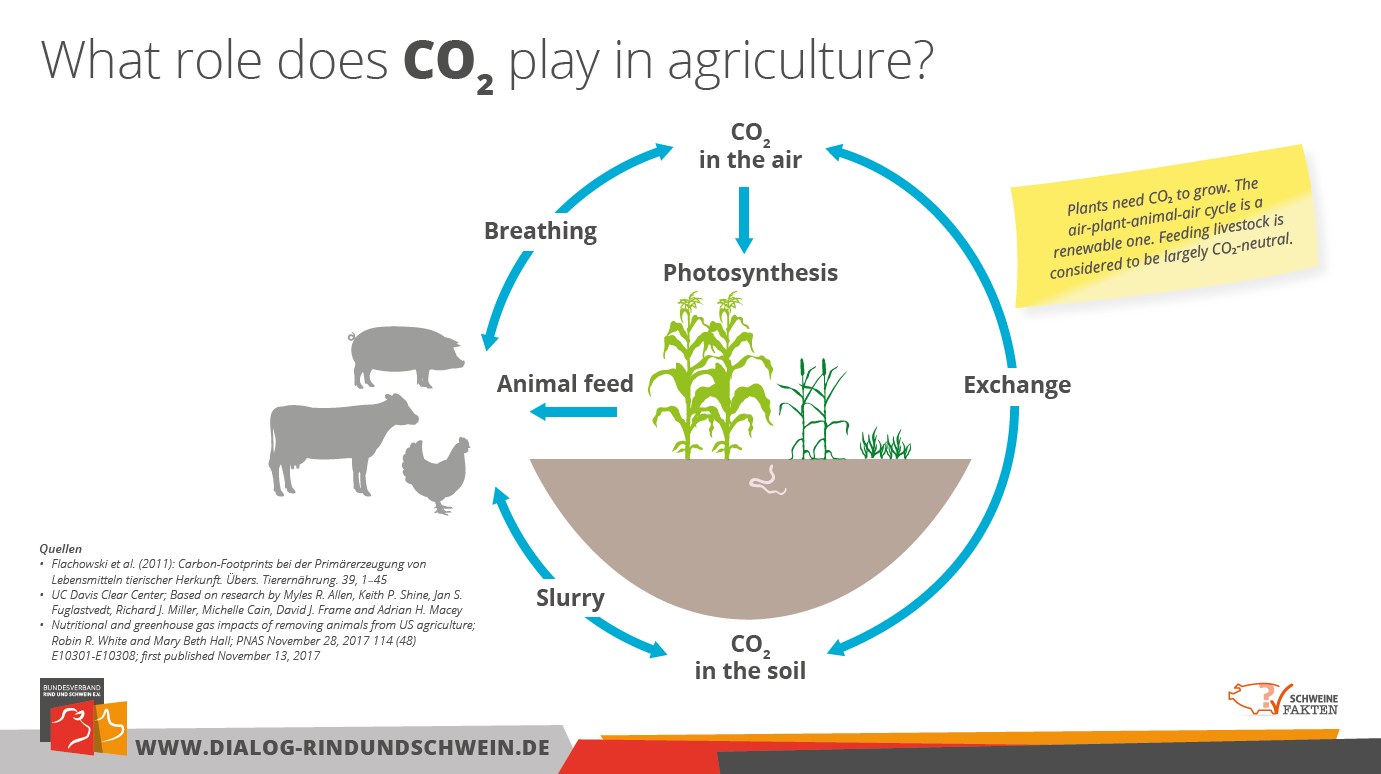
Plants absorb CO₂ from the atmosphere through photosynthesis and incorporate the carbon into their biomass. Through feeding, this carbon enters livestock production. In ruminants, part of it is converted into methane during digestion and released into the atmosphere. Over time, the methane is oxidised into CO₂. Carbon also returns to the soil through organic fertilisers such as manure and slurry.
This is a natural, biogenic carbon cycle: the carbon absorbed by plants is released back into the environment through crop production and livestock farming. Unlike the combustion of fossil fuels, this process does not fundamentally introduce additional carbon that has been stored underground for millions of years into the atmospheric carbon cycle. Therefore, the use of plants as animal feed and the release of the biogenic carbon they contain can be considered largely CO₂-neutral in terms of the carbon cycle.


